
The government in December had announced incentives for exporters that include extension of two per cent interest subsidy for an additional one year ending March, 2014.
India will unveil its much-awaited new Foreign Trade Policy 2023-28 on Friday, with a view to boost exports amid slowing global trade. Commerce and Industry Minister Piyush Goyal will announce the foreign trade policy, according to the ministry. The current foreign trade policy (2015-20) is in force till March 31, 2022.

India's trade minister Anand Sharma said on Sunday that the government would come up with a comprehensive foreign trade policy in August.

The government has decided to postpone the release of the new Foreign Trade Policy (FTP) and extend the existing one by six months on account of global uncertainties and currency fluctuations. The government was scheduled to announce the new FTP by the end of September. The current policy was to end on September 30.

The government on Wednesday extended the existing foreign trade policy (FTP) for six more months up to September 30 this year due to the Covid-19 pandemic, according to a notification. FTP provides guidelines for enhancing exports to push economic growth and create jobs. On March 31, 2020, the government had extended the Foreign Trade Policy 2015-20 for one year till March 31, 2021, amid the coronavirus outbreak and the lockdown.
The supplement is scheduled to be released in the first half of April this year. Exporters were disappointed with Budget 2008-09 as it does not propose any specific measures to help them tide over the situation. In the April-January period of 2007-08, exports stood at $124.19 billion, an increase of 21.62 per cent from $102.12 billion during the year-ago period.

Amid rupee's free fall and slowdown in western markets, the government is likely to announce incentives in the foreign trade policy (FTP), scheduled for June 5, to boost exports.
The government will announce the annual Foreign Trade Policy on April 8, which will aim at giving a boost to exports of pharmaceutical, auto components and services.
Following are the highlights of the Annual Supplement 2006 to the Foreign Trade Policy unveiled by Commerce and Industry Minister Kamal Nath on Friday
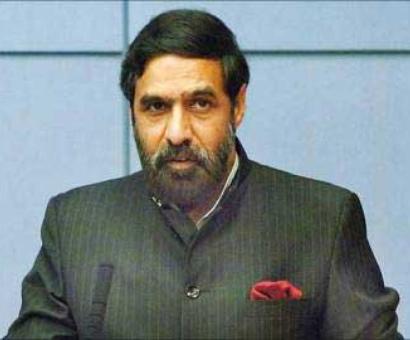
The policy aims at developing export potential, improving export performance, boosting foreign trade and earning valuable foreign exchange.
With India's exports touching $80 billion in 2004-05, government on Friday announced a slew of measures in the new Foreign Trade Policy, aimed at taking the exports to $92 billion in the current fiscal.
Commerce Minister Kamal Nath on Monday ruled out any differences with the finance ministry on certain provisions of the Foreign Trade Policy and said the Policy will be announced before April 10.

The government on Friday came out with Foreign Trade Policy (FTP) 2023 which seeks to boost the country's exports to $2 trillion by 2030 by shifting from incentives to remission and entitlement based regime. Unlike the practice of announcing 5-year FTP, the latest policy has no end date and will be updated as and when needed, said Director General of Foreign Trade (DGFT) Santosh Sarangi while briefing media about FTP 2023. Earlier, Commerce and Industry Minister Piyush Goyal unveiled FTP 2023 which will come into effect from April 1, 2023.
The government may roll out a new foreign trade policy (FTP) of a shorter term of two-three years in a bid to keep pace with the fast-evolving scenarios in international trade which have been triggered by recent disruptions, such as the pandemic and the Russia-Ukraine war. An FTP is an elaborate policy guideline and strategy to promote the export of goods and services, with a duration of five years usually. The existing policy came into force on April 1, 2015, and was valid for five years, before multiple extensions.
The new Foreign Trade Policy, to be unveiled on April 7, would focus mainly on attracting foreign direct investment and generating employment for the youth.
The government will announce a new foreign trade policy next month aimed at boosting exports especially from agriculture sector.
India will on Friday unveil its Foreign Trade Policy, which is likely to give a new thrust to toys, leather, textiles, stationery, sports goods and processed food exports.
): Tea exporters in Siliguri in West Bengal are upbeat thanks to the new provision bringing the tea industry under the Vishesh Krishi Upaj Yojana in the new foreign trade policy.
With India's exports all set to touch $80 billion in 2004-05, the new Foreign Trade Policy to be unveiled on Friday will have a slew of measures to boost farm exports apart from traditional sectors like textiles, gems and jewellery.

New foreign trade policy to stress manufacturing exports.
Commerce and Industry Minister Piyush Goyal on Monday said the existing foreign trade policy (FTP) will be extended for six months till March 31 next year. The government had earlier extended the FTP 2015-20 until September 30 this year due to the Covid-19 crisis. The FTP provides guidelines for enhancing exports to push economic growth and create jobs.
The much-delayed Foreign Trade Policy (FTP), which will roll out steps to boost exports, is expected to be unveiled soon.

The five-year Foreign Trade Policy, to be unveiled on August 27, is expected to give incentives to Indian exporters to widen their global markets beyond the United States, the European Union and Japan in the face of the economic crisis in these key destinations.
The Directorate of Revenue Intelligence (DRI) has successfully intercepted and seized 512 kg of red sanders at Cochin Port, preventing its illegal export to China. The red sanders were concealed within a consignment declared as rubber core veneer.

The United States Trade Representative (USTR) has expressed concerns that India's Digital Personal Data Protection (DPDP) Act, particularly the lack of a deemed consent mechanism for credit information companies, and the Information Technology (IT) Rules of 2021, along with frequent internet shutdowns, could negatively impact the ability of US companies to operate and trade in India.

Equity benchmark indices Sensex and Nifty experienced a significant decline, primarily driven by a selloff in IT stocks due to concerns about AI disruption and renewed worries over global trade.

'India should understand that we are not going to make the same mistakes with India that we made with China 20 years ago.'

India's foreign direct investment (FDI) inflows are projected to surpass $90 billion in 2025-26 (FY26), driven by robust policy reforms, free trade agreements, and strong economic growth, according to DPIIT Secretary Amardeep Singh Bhatia.

Indian investors have seen their wealth erode by a staggering Rs 16.77 lakh crore over four trading sessions, as the markets faced deep losses driven by elevated crude oil prices, geopolitical tensions, persistent foreign fund outflows, and a record-low rupee.

The Indian government has imposed import restrictions on all forms of gold, silver, and platinum articles to prevent misuse of free trade agreements (FTAs). The restrictions apply immediately, regardless of prior contracts or commitments.

Sharp differences between Iran and the UAE over the West Asia conflict were on full display during the BRICS foreign ministers' meeting in New Delhi, signalling the challenges the bloc faces in reaching a consensus position on the crisis.

The central bank is yet to consider actions such as a rate hike or mobilising dollar inflows from non-resident Indians to boost forex reserves as it cannot afford to continue with them for long when the rupee's internationalisation tops its agenda, explains Tamal Bandyopadhyay.

India is among six countries on the priority watch list in a US report addressing the protection and enforcement of intellectual property rights.

Donald Trump agreed with Xi Jinping's assessment of the US as a 'declining nation,' but attributed the decline to the policies of the Biden administration.

US President Donald Trump will visit China from May 13 to 15 at the invitation of President Xi Jinping. The visit occurs amidst global tensions, including the war in West Asia and trade disputes between the US and China. Discussions are expected to cover China-US relations, world peace, and economic issues.

With the Iran war escalating sharply and crisis deepening in the global energy market, India on Monday unveiled a coordinated plan to support exporters and shippers caught in the fallout.

The deal shifts the US posture towards India from hostile to neutral, and that matters for growth, points out T T Ram Mohan.

The Indian rupee weakened against the US dollar due to geopolitical tensions surrounding the Strait of Hormuz and ahead of the Reserve Bank of India's monetary policy review.

The Indian rupee depreciated 20 paise to close at a fresh all-time low of 94.88 against the US dollar, driven by surging Brent crude oil prices, hovering around USD 115 per barrel, and persistent foreign capital outflows.
 © 2026 Rediff.com - Advertise with us - Disclaimer - Privacy Policy - Sitemap - Feedback - About us - Terms of use - Grievances